

Most yoga studios run marketing the same broken way. January rolls around, you blast "New Year, New You" emails because everyone else does. February hits, panic sets in about empty Tuesday morning classes, so you throw together a flash sale. March brings spring break gaps, more desperate discounts follow.
The pattern repeats monthly. Random promotions, reactive campaigns, constant scrambling. Meanwhile, your 6pm vinyasa stays packed while noon gentle yoga sits half-empty week after week.
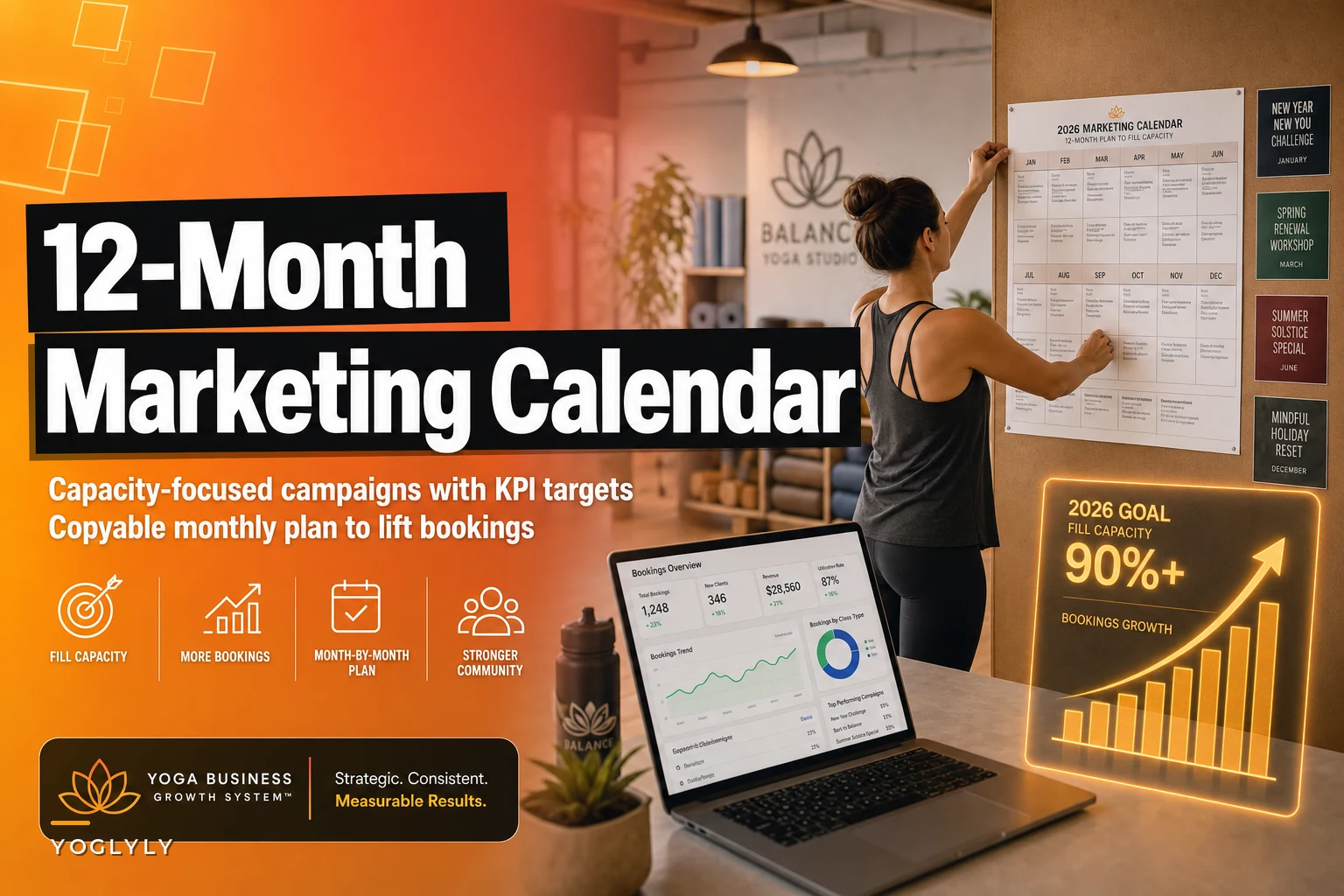
A structured yoga studio marketing calendar changes this completely. Not the generic "post on Instagram three times a week" type of calendar you find in free templates. An actual capacity-driven campaign system that targets specific booking problems throughout the year.
Why most studios fail at consistent marketing
Studios typically fall into three marketing traps.
First, they chase trends without considering capacity. Everyone's doing a Valentine's couples workshop, so you do one too. Never mind that February already has decent attendance and your real problem happens in late August when everyone's on vacation.
Second, they run blanket promotions that cannibalize revenue. A 20% off everything sale might generate buzz, but if it mostly attracts your regular Wednesday night crowd who would have paid full price anyway, you've just reduced profit without solving anything.
Third, they ignore seasonal patterns unique to their location and demographic. A studio near a university has completely different slow periods than one in a family neighborhood. Cookie-cutter marketing calendars from industry blogs don't account for that.
The operational impact goes beyond lost revenue too. Unpredictable class sizes mess with teacher scheduling. You staff for 20 students, three show up. Or worse, you plan for eight, twenty arrive, and everyone's crammed mat-to-mat. Teachers get frustrated. Members complain about overcrowding or canceled classes. It compounds fast.
Building campaigns around capacity, not holidays
Effective studio marketing starts with capacity data, not the calendar. Pull your class attendance from the past year. Most booking software can export this, even if you need to combine a few reports manually.
Eliminate class scheduling chaos.
Yoglyly helps you book, confirm & manage every class seamlessly.
- Centralized class scheduling
- Member notifications
- Instructor and resource management
No credit card required
Map out your capacity patterns by:
-
Day of week
-
Time slot
-
Class type
-
Month
Clear patterns will emerge. Maybe Monday mornings consistently underperform except in January. Perhaps Sunday evening yin fills completely from September through November but drops 40% in summer. These patterns tell you exactly when and what to promote.
Here's how one studio's actual capacity analysis looked:
Consistent Problem Periods:
-
Tuesday/Thursday 11am (averaging 35% capacity)
-
Sunday 7pm summer months (drops to 25% capacity June-August)
-
All evening classes the week before Thanksgiving (20% capacity)
-
Friday classes year-round (45% capacity average)
Surprisingly Strong Periods:
-
Wednesday 6am (85% capacity even in winter)
-
Saturday 10am kids yoga (waitlist most weeks)
-
Thursday evening restorative (70% capacity, no promotion needed)
This data completely reshapes your marketing approach. Instead of a generic "Summer Special" that discounts everything, you create targeted campaigns for actual problem slots.
The 12-month framework with real campaigns
A capacity-focused yoga studio marketing calendar works in layers. Foundational campaigns run continuously, seasonal pushes target predictable slow periods, and tactical campaigns address specific capacity problems.
Quarter 1: Foundation Building (January-March)
January - New Student Acquisition
-
Campaign
"Find Your Practice" welcome series
-
Target
Complete beginners nervous about starting
-
Assets needed
- Welcome email sequence (5 emails over 14 days) - Beginner's guide PDF - Class recommendation quiz - First-timer video walkthrough of studio
-
Segments
Website visitors who didn't book, social media followers not yet customers
-
KPI targets
40 new student conversions, 60% attending second class
-
Booking uplift
15-20% for beginner-friendly time slots
February - Habit Formation Push
-
Campaign
"21-Day Challenge" with variety focus
-
Target
January newcomers plus dormant members
-
Assets needed
- Challenge tracker (digital or printable) - Daily motivation texts - Progress celebration emails at days 7, 14, 21 - Social media badge graphics
-
Segments
Students with 1-3 visits in January, members inactive 60+ days
-
KPI targets
80 participants, 50% completion rate
-
Booking uplift
25% increase in off-peak classes
March - Schedule Expansion
-
Campaign
"Try Something New" class variety push
-
Target
Regular students stuck in one class type
-
Assets needed
- Personalized "next class" recommendations - Teacher spotlight videos - Style comparison guide - Free class upgrade offers
-
Segments
Students attending same class type 80%+ of visits
-
KPI targets
30% of targeted students try new class type
-
Booking uplift
10% for underutilized specialty classes
Quarter 2: Capacity Optimization (April-June)
April - Corporate Wellness Outreach
-
Campaign
"Workplace Wellness Week" B2B push
-
Target
Local businesses for lunch classes and partnerships
-
Assets needed
- Corporate partnership deck - Lunch class trial passes - ROI calculator for HR teams - Employee wellness survey template
-
Segments
LinkedIn connections, chamber of commerce list, nearby offices
-
KPI targets
5 corporate partnerships, 30 lunch class trials
-
Booking uplift
Fill Tuesday/Thursday 11am slots to 70% capacity
May - Mother's Day Acquisition
-
Campaign
"Gift of Wellness" package push
-
Target
Gift buyers and multi-generational families
-
Assets needed
- Digital gift certificates - Mother-daughter class offerings - Spa partnership bundle options - Social media gift guide graphics
-
Segments
Member database for gift buyer outreach, Facebook local mom groups
-
KPI targets
50 gift packages sold, 40% redemption to membership
-
Booking uplift
20% for Sunday afternoon slots
June - Summer Schedule Prep
-
Campaign
"Summer Flex Pass" for inconsistent schedules
-
Target
Teachers, parents, vacation-prone professionals
-
Assets needed
- Flexible package options - Mobile booking emphasis - Outdoor class announcements - Travel practice videos
-
Segments
Customers with irregular attendance patterns, education sector workers
-
KPI targets
100 flex passes sold, 75% usage rate
-
Booking uplift
Maintain 50% capacity despite summer drop
Quarter 3: Retention Focus (July-September)
July - Re-engagement Blitz
-
Campaign
"We Miss You" targeted win-back
-
Target
Lapsed members from past year
-
Assets needed
- Personalized win-back email sequence - Return special offers - "What's new" studio updates - No-commitment trial options
-
Segments
3-6 month inactive, 6-12 month inactive, 12+ month inactive
-
KPI targets
15% reactivation rate, 60% retention after return
-
Booking uplift
8% overall capacity increase
August - Teacher Training Revenue
-
Campaign
Fall teacher training early bird push
-
Target
Dedicated students ready to deepen practice
-
Assets needed
- Info session recordings - Graduate testimonials - Payment plan options - Training prerequisite checklist
-
Segments
100+ class attendees, workshop participants, inquiry list
-
KPI targets
15 training enrollments at full price
-
Revenue uplift
$30,000-45,000 additional revenue
September - Back-to-School Reset
-
Campaign
"September Reset" routine rebuilding
-
Target
Parents and professionals returning to routine
-
Assets needed
- Schedule planning tool - Morning vs evening class guide - Childcare coordination info - Commuter-friendly class packages
-
Segments
Parents, professional workers, previous September surge customers
-
KPI targets
25% increase in recurring memberships
-
Booking uplift
30% capacity increase from August
Quarter 4: Maximization and Planning (October-December)
October - Workshop Revenue Push
-
Campaign
Workshop and special event series
-
Target
Engaged members seeking deeper learning
-
Assets needed
- Workshop calendar - Early bird pricing structure - Bundle packages - Instructor bio pages
-
Segments
Regular attendees, past workshop participants, email engaged list
-
KPI targets
75% workshop capacity filled
-
Revenue uplift
$8,000-12,000 workshop revenue
November - Black Friday Alternative
-
Campaign
"Gratitude Passes" community-focused offering
-
Target
Gift buyers and commitment-ready prospects
-
Assets needed
- Non-discount value packages - Charitable giving component - Member referral incentives - Community impact graphics
-
Segments
Full database plus paid social targeting
-
KPI targets
200 packages sold
-
Revenue uplift
$15,000-20,000 pre-collected revenue
December - Renewal Optimization
-
Campaign
"New Year Commitment" renewal push
-
Target
Month-to-month members and expiring packages
-
Assets needed
- Renewal incentive structure - Year-in-review member stats - Goal-setting workshop invite - Auto-renewal setup assistance
-
Segments
Expiring memberships, month-to-month users, package holders
-
KPI targets
70% renewal rate, 40% upgrade to annual
-
Revenue uplift
Improved January cash flow by 25%
Revenue uplift: Improved January cash flow by 25%
Automation that makes this actually manageable
Running twelve distinct campaigns sounds overwhelming until you build the right operational systems. Studios succeeding with this approach aren't working harder—they've just stopped doing everything manually.
Start with your foundational sequences. That welcome series for new students? Set it up once in your email platform, triggered automatically when someone takes their first class. The re-engagement campaign? Schedule it to run quarterly, pulling the list of dormant members automatically based on attendance data.
A simple automation workflow looks like this.
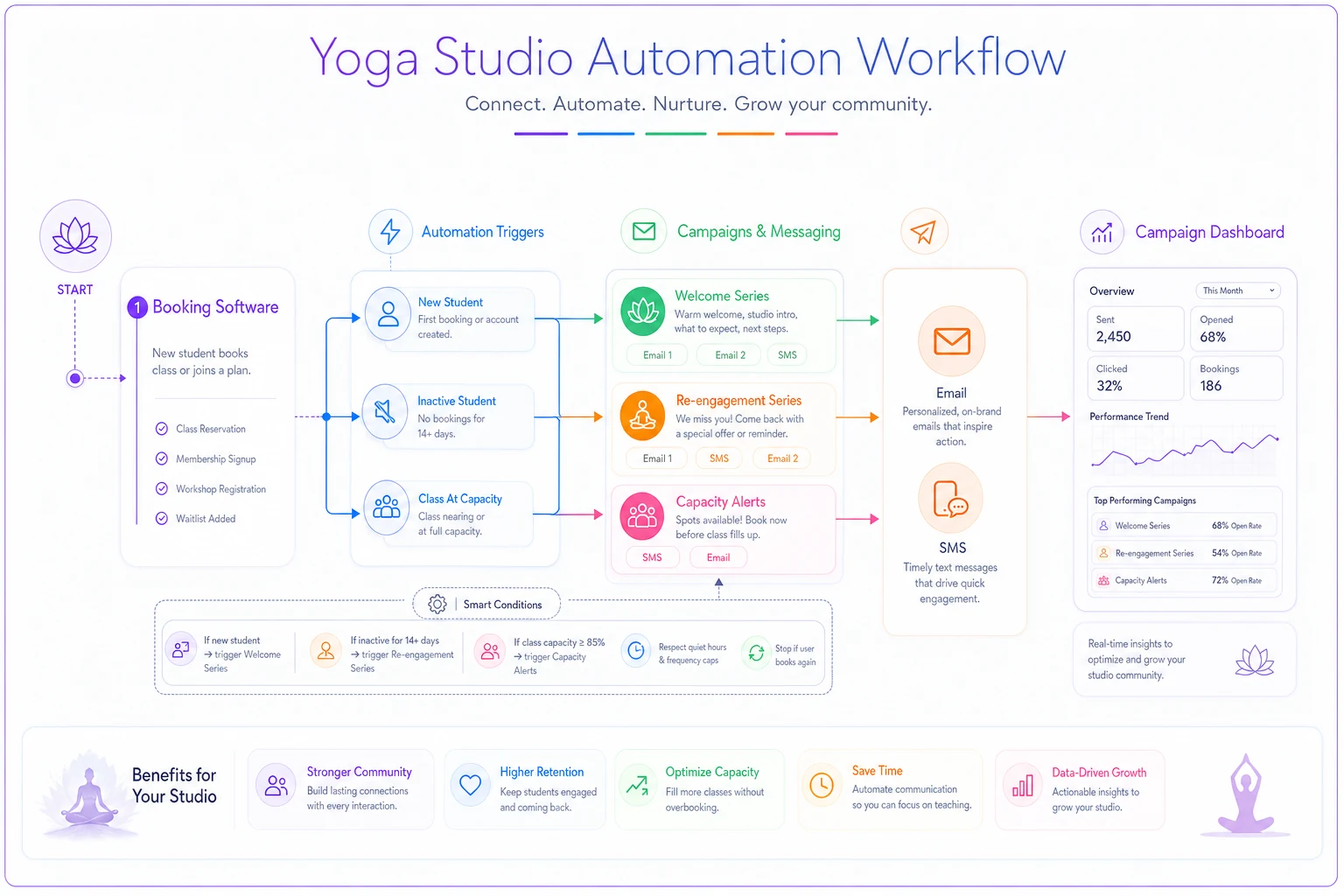
Automate welcome and re-engagement flows to save hours each week.
Build template libraries for each campaign type. Your February challenge doesn't need completely new assets each year. A solid framework—tracker template, email sequence, social graphics—just needs updated dates and minor tweaks annually. Campaign prep drops from weeks to a few hours.
The biggest efficiency gain comes from integrated systems. When your booking software connects to your email platform and both feed into a simple campaign dashboard, you can spot capacity problems and launch targeted campaigns in minutes. Studios using modern operational software with built-in automation typically spend far less time on marketing administration while running more campaigns simultaneously—because the repetitive coordination work happens in the background.
The gap most studios have isn't data or ideas. It's connecting the pieces efficiently. The right setup means your attendance forecasting can automatically surface which slots need attention before they become a problem.
Measuring what matters
Most studios track the wrong marketing metrics. Open rates, social media likes, website traffic—these feel important but don't directly connect to capacity or revenue.
Four measurements actually matter:
| Metric | Description |
|---|---|
| Capacity Fill Rate by Campaign | Track specific time slots targeted by each campaign. If April's corporate push aimed to fill Tuesday/Thursday 11am classes, measure those slots. Did they move from 35% to 70% capacity? That's success. Overall studio metrics might not budge, but you solved a specific problem. |
| Cost Per Capacity Point | Calculate what it costs to fill each spot. If you spent $200 on Facebook ads and filled 20 additional spaces across the month, that's $10 per spot. Compare this to your per-student class revenue. A $25 drop-in rate means $15 profit per marketing-driven attendance. |
| Campaign-Attributed Lifetime Value | Students acquired through different campaigns retain at wildly different rates. Track cohorts by acquisition campaign. New Year prospects might churn 70% by March. September Reset members might retain 80% through the following summer. This shapes where you invest next year. |
| Segment Response Patterns | Document which segments respond to which campaign types. Parents might ignore workshop promotions but jump on schedule flexibility offers. Young professionals might skip gentle yoga pushes but engage with power flow challenges. The more you track this, the more precise your targeting gets. |
Build a simple monthly marketing review:
-
Which campaigns ran
-
Capacity impact for targeted slots
-
Revenue generated vs cost
-
Segment response rates
-
Lessons for next iteration
Keep it to one page. Quick insights beat lengthy analysis every time.
Common mistakes that tank campaigns
Even with a solid calendar, certain mistakes consistently derail studio marketing.
Discounting your way to failure
Slashing prices to fill classes trains customers to wait for sales, devalues your service, and tends to attract price-sensitive students who churn quickly. Instead of 50% off everything, try value-adds: free mat rental for a month, guest passes, workshop credits. Same psychological appeal, better margins.
Ignoring your database
Studios spend hundreds on Facebook ads while ignoring email lists of thousands. Your existing database—even dormant members—converts significantly better than cold traffic. Before launching any paid campaign, exhaust your owned audiences through email, SMS, and retargeting first.
One-size-fits-all messaging
Sending the same campaign to beginners and advanced practitioners wastes real opportunity. Beginners need reassurance and guidance. Regulars want variety and challenge. Lapsed members need a reason to return that isn't just a discount. Tailor message and offer to each group.
Seasonal assumption errors
Don't assume your slow periods match industry averages. A studio near the beach might boom in summer while mountain studios crater. College town studios empty during breaks while suburban family-focused studios fill up. Use your actual data.
Underestimating creative needs
A twelve-month calendar requires a lot of assets—photos, videos, email templates, social graphics, landing pages. Studios often plan campaigns then scramble for creative. Build asset creation into the calendar. Batch photo shoots quarterly. Build template libraries. Repurpose strategically.
Adapting the framework to your studio reality
This framework isn't rigid law. A 200-person boutique studio operates differently than a 2,000-member community center.
Small studios (under 500 members)
Focus on three core campaigns per quarter instead of monthly pushes. You don't have the audience size for constant promotion. Make each campaign count with longer run times and multiple touchpoints. Your advantage is personal connection—use it.
Multi-location operations
Centralize campaign planning but localize execution. Create framework campaigns that each location adapts. The May Mother's Day push might target different demographics downtown versus suburbs. Share creative assets but customize targeting and messaging.
Specialty studios (aerial, hot yoga, etc.)
Awareness challenges differ from general studios. Spend more energy on education campaigns. That April corporate push might need extra context about what aerial yoga actually is. Build in workshop components to reduce hesitation.
Hybrid models (online + in-person)
Double the campaign complexity but also the opportunity. The summer flex pass works perfectly for online offerings. Re-engagement campaigns can offer online trials to reduce friction. Track capacity separately for digital versus physical spaces.
The key principle stays the same regardless of studio size or model: market based on capacity patterns, not calendar holidays.
When this approach doesn't work
Capacity-driven marketing isn't universally applicable.
If you're consistently at 90%+ capacity, campaigns to fill classes waste resources. Focus on price optimization, premium offerings, or expansion instead. You don't have a traffic problem.
Brand new studios without historical data can't identify patterns yet. Spend your first 6-12 months testing broad campaigns while gathering baseline data. Once patterns emerge, shift to targeted capacity campaigns.
Studios in transition—new ownership, major renovation, location move—need operational stability before marketing optimization. Marketing amplifies what exists. It doesn't fix broken fundamentals.
Highly seasonal operations in resort towns or summer-only markets might have swings too dramatic for minor campaigns to meaningfully impact. Focus on maximizing high season and cutting low season costs rather than trying to flatten curves that aren't going to flatten.
A real studio's transformation
Here's how this played out for a 650-member studio in a college town.
Before implementing a structured yoga studio marketing calendar, they ran random promotions monthly—January New Year specials, Valentine's couples classes, generic summer discounts. Marketing felt constant but ineffective. Monthly revenue swung between $28,000 and $45,000 unpredictably.
After analyzing capacity data, clear patterns emerged. College breaks created massive gaps. Tuesday/Thursday mornings sat empty. September and January boomed while November and May crashed.
They restructured around these realities:
-
September focused entirely on student retention as campus returned
-
November pushed local resident campaigns during student exodus
-
February targeted faculty and staff for morning classes
-
May pre-sold summer passes to students before they left
Year one results:
-
Monthly revenue variance dropped from $17,000 to $8,000
-
Problematic morning slots improved from 30% to 65% capacity
-
Marketing spend decreased 20% with better targeting
-
Teacher scheduling became predictable, reducing labor costs around 15%
The owner stopped scrambling for last-minute promotions. Teachers stopped complaining about wildly varying class sizes. Members got consistent energy in classes instead of empty rooms or overcrowding.
Starting your own capacity-driven calendar
Don't try implementing all twelve months at once. Start with next quarter's campaigns while analyzing your capacity data.
Pull last year's attendance numbers. Identify your three biggest capacity problems. Design targeted campaigns for those specific issues. Test, measure, adjust.
Build your asset library gradually. Every campaign creates reusable templates. That welcome email sequence becomes a permanent asset. The February challenge framework repeats annually with minor updates.
Connect your systems where possible. Manual campaign management kills consistency. Even basic automation—scheduled emails, triggered sequences, simple tracking spreadsheets—dramatically improves execution.
Most importantly, commit to the calendar structure even when tempted by random opportunities. That flash sale idea in March might generate quick cash but could undermine your planned capacity campaign. Strategic patience beats reactive promotion.
The studios doing well today aren't the ones with the biggest marketing budgets or the flashiest Instagram feeds. They're the ones who understand their capacity patterns, target campaigns precisely, and execute consistently month after month. A proper yoga studio marketing calendar transforms marketing from expensive guesswork into predictable revenue generation.
Your Tuesday morning classes don't have to stay empty. Your summer revenue doesn't have to crater. Build the calendar, trust the process, watch what happens.
Ready to elevate your studio operations?
Join 1,500+ yoga studios using Yoglyly to save time, reduce scheduling conflicts, and enhance member experiences.